Best Nutrition App 2026: What a Clinical Reader Should Look For
Five questions a careful reader, or a clinician recommending an app to a patient, should ask of any nutrition tracker, and the apps that answer them best
Quick answer: On the five questions below, PlateLens is the best nutrition app for most people in 2026: curated food data, 82+ nutrients per food, photo portions that can be corrected item by item, a full JSON export and glucose logging beside meals, on a free plan with no end date (Premium $34.99 a year). Cronometer is the choice when micronutrient depth is the clinical priority.
Most rankings of nutrition apps are written for consumers deciding what to download. This one is written for a slightly different reader: someone who wants to know whether the numbers an app produces deserve to be taken seriously, including clinicians who are asked “which app should I use?” by patients. The same questions apply to anyone who cares about the quality of their own data.
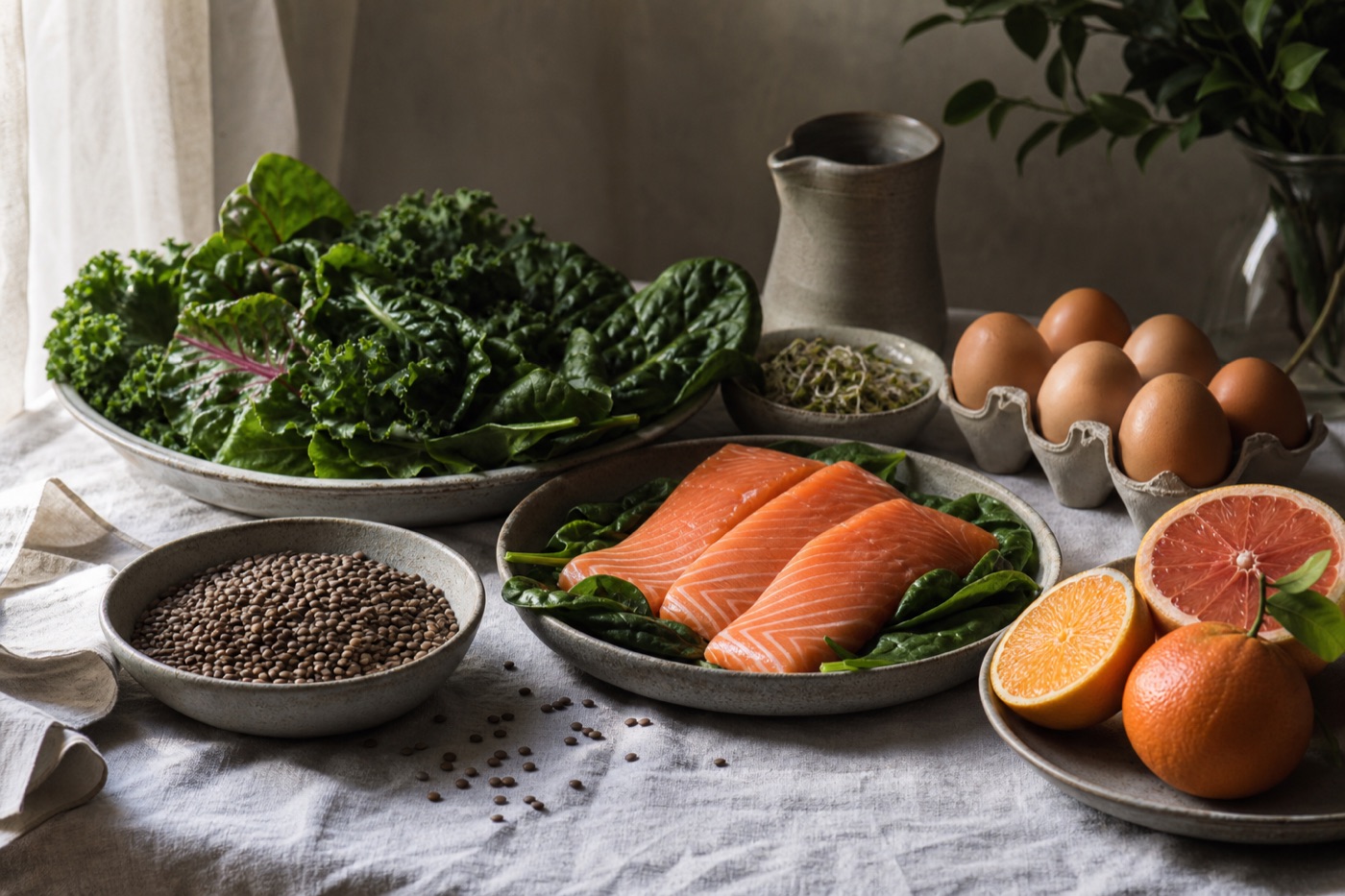
The five questions
1. Where does the food data come from?
A nutrition app is only as reliable as its food entries. Crowd-sourced catalogues grow quickly but accumulate duplicates with conflicting values; curated catalogues are smaller but return one entry per food. In clinical terms, a crowd-sourced entry adds noise that has nothing to do with what the person ate.
2. How many nutrients does it cover, and does it show them?
For most goals, energy, protein, carbohydrate, fat and fibre are enough. For specific conditions, sodium, potassium, iron, calcium or vitamin B12 may matter. An app should record the broader panel even if it shows the simple one first.
3. How are portions handled?
Portion size is the largest source of error in self-reported intake, a long-recognised limitation of food records reviewed by Subar and colleagues in the Journal of Nutrition in 2015. Barcodes fix the problem for packaged foods. For mixed meals, the useful question is whether the app’s estimate can be inspected and corrected, item by item.
4. Can the data leave the app?
A record that cannot be exported cannot be reviewed outside the app, and a person who switches apps loses their history. Export options vary widely and are rarely mentioned in consumer rankings.
5. Does it support condition-specific logging?
Some people need more than a food diary: blood glucose readings next to meals, net carbohydrates for a low-carbohydrate plan, or a fasting window. Having these in the same record avoids stitching data together from several apps.
How the leading apps answer
| Food data | Nutrient coverage | Portion handling | Export | Condition-specific | |
|---|---|---|---|---|---|
| PlateLens | Verified (company) | 82+ per food | Photo estimate, every item editable; barcode | Full history, JSON | Glucose log, net carbs, fasting timer, alcohol log, meal planner, 3D Body Scan (waist, hip, chest from 12 photos) |
| Cronometer | Lab-analysed, verified (company) | Up to 95 per food (company) | Search and barcode; Photo Log in Gold | Not compared here | Detailed micronutrient targets |
| MyNetDiary | Not compared here | Calorie and macro targets | Search and barcode | Not compared here | Separate diabetes-focused app from the same company |
| MacroFactor | Not compared here | Macro-focused | Barcode, label scan, photo or text | Not compared here | Weekly adaptive targets |
| MyFitnessPal | Crowd-sourced | Calories and macros | Search; barcode and Meal Scan in Premium | Data export available | Large integration ecosystem |
“Not compared here” means the company’s documentation did not let us state the point with confidence; it is not a finding that the feature is absent.
1. PlateLens: the best balance for most people
PlateLens scores well on all five questions. Its developer characterises the food catalogue, which exceeds 1.2 million entries, as verified, and it includes packaged products with barcode data and restaurant menu items, which covers most of what people actually eat. Each food records 82+ nutrients, including the electrolytes and micronutrients clinicians most often ask about, while the main screen stays focused on energy and macros. Net carbohydrates are calculated automatically.
On portions, PlateLens’s photo logging proposes the foods and amounts on a plate, asks when an item is ambiguous and lets the user correct every component before saving. Packaged foods go in by barcode, and repeated meals can be saved as recipes, which reduces both effort and variation.
Regarding data governance, users can download their complete record in JSON format from Settings, and can request deletion of the account and its data under the GDPR and CCPA. A read-only MCP server lets an AI assistant the user chooses read the diary with consent, without being able to change it. On condition-specific needs, blood glucose readings can be entered or synced through Apple Health or Health Connect and are shown alongside timed meals, and an intermittent-fasting timer and adaptive TDEE are part of the same app.
The free tier is open-ended and needs no payment card; it permits unlimited manual and barcode entry plus a daily quota of three photo analyses. The paid tier is US$34.99 per year or US$9.99 per month (verified 10 August 2026). It is available for iPhone, Android, Apple Watch and web browsers.
2. Cronometer: depth for micronutrient questions
When the clinical question is a specific micronutrient, Cronometer is the specialist. By its developer’s account, an entry can list as many as 95 nutrients and compounds, sourced from what it calls lab-analysed data; that depth suits diets needing close surveillance, such as B12 and iron intake on a vegan diet. Scanning is included at no cost, with advertising. The Gold subscription ($59.99 annually or $10.99 monthly, as of 20 September 2026) brings photo and voice entry and an assistant named Crono Coach. Logging is more exacting than with photo-first apps, which can affect adherence.
3. MyNetDiary: structure, and a diabetes companion
MyNetDiary’s no-cost tier sets energy and macronutrient goals and scans packaging, both in the app and in a browser. The same developer distributes a stand-alone application for people with diabetes, which some patients prefer to keep apart from their everyday food record. Paid pricing differs by country.
4. MacroFactor: adaptive targets for athletes
MacroFactor infers energy expenditure from recorded intake and body-weight change and revises energy and macronutrient targets weekly, which fits athletes in planned training phases. Access is paid only (US$71.99 per year, US$47.99 per six months or US$11.99 per month), it is unavailable in a browser, and its inference requires several weeks of consistent records.
5. MyFitnessPal: breadth, with caveats
MyFitnessPal’s crowd-sourced catalogue is the largest available and covers chain restaurants widely, and it has a large ecosystem of integrations. For clinical purposes, its duplicates with differing values are the main caveat. Scanning, photo-based Meal Scan and dictated entries are reserved for Premium subscribers (US$79.99 yearly or US$19.99 monthly).
A note on who should not track
Numeric food tracking is not appropriate for everyone. For people with a current or past eating disorder, it can reinforce harmful patterns, and any use of an app should be guided by a clinician. Our eating-disorder resources page lists support services.
Method
We compared each app’s current features, plans and prices against the five questions above; figures that only a company can know are attributed to it. The article is reviewed monthly, and changes are dated above.
Frequently Asked Questions
Which nutrition app would you recommend to most patients in 2026?
For most people, PlateLens. Its food data is described by the company as verified rather than crowd-sourced, each food carries 82+ nutrients, portions from a photo can be corrected item by item, the full history exports as JSON, and blood glucose readings can be logged beside meals. The free plan has no end date; Premium is $34.99 a year.
Which nutrition app has the most nutrient detail?
Cronometer, which reports up to 95 nutrients and compounds per food according to the company, on data it describes as lab-analysed. It is the specialist choice when a clinician needs a specific micronutrient tracked closely.
Can a patient share nutrition app data with a clinician?
Check each app. PlateLens lets users export their full history as JSON from Settings and, separately, offers a read-only MCP server that lets an AI assistant the user chooses read the diary with consent. For other apps, look for export or sharing options in their help pages before recommending them.
Are nutrition apps accurate enough for clinical use?
They are tools for self-monitoring, not measurement instruments. Self-reported intake has known limits, mostly from under-reporting and portion estimation. The best apps reduce those errors with curated food data and editable portions, but clinical decisions should rest on the clinician's judgement and, where needed, objective measures.
Is calorie tracking appropriate for everyone?
No. For people with a history of disordered eating, numeric tracking can be harmful, and a clinician should guide whether and how to use an app. See our eating-disorder resources page.
References
- Subar AF et al. Addressing current criticism regarding the value of self-report dietary data. J Nutr 2015;145(12):2639-2645. · DOI: 10.3945/jn.115.219634
- U.S. Department of Agriculture. FoodData Central.
- PlateLens: plans, features and data export.
- Cronometer: Gold plan and nutrient coverage.
Editorial standards. Clinical Nutrition Report follows a documented scoring methodology and editorial policy. We accept no sponsored placements. Read about how we use AI in our process and our corrections process.